Automatic Gate Maintenance Checklist: What Owners Should Inspect
A practical owner’s inspection routine for hinges, rollers, track, wiring and safety devices—plus the repairs that belong to a trained technician.
A simple owner visual check
Walk the gate from both sides while it is stopped. Look for fresh scrape marks, loose fasteners, leaning posts, cracked welds, rust expansion, damaged conduit, frayed wire, standing water and landscaping in the travel path. Confirm warning signs remain visible.
Operate the gate from a safe position and listen. Uneven speed, a new squeal, excessive sway, delayed movement or a different stopping point is worth documenting. A short video and the operator’s displayed diagnostic code can make the service call more efficient.
| Area | Look for | Action |
|---|---|---|
| Gate and posts | Lean, cracks, loose hardware, corrosion | Stop use for structural movement or a cracked hinge |
| Swing hinges / slide hardware | Noise, drag, worn rollers, track debris | Clear loose debris; schedule mechanical repair |
| Operator and wiring | Damage, pests, water, exposed cable | Keep cabinet closed and call a technician |
| Photo eyes / edges | Misalignment, dirt, physical damage | Follow owner manual; never bypass |
| Travel path | Vehicles, storage, branches, pedestrian use | Keep clear and provide separate pedestrian access |
The gate should move freely before the operator works hard
A swing gate should not drop, scrape or bind. A sliding gate should stay aligned on its track or guide system without exposed pinch points. DASMA’s owner checklist calls for inspection of rollers, fasteners, brackets, wiring, rust, wear and fall-over protection, along with observation of the full opening and closing cycle.
Lubrication is model- and hardware-specific. Use only the product and locations identified by the gate or hardware manufacturer. Lubricating a dirty track, sealed bearing or electrical component can create a new problem.
Check safety devices without defeating them
Photoelectric sensors, sensing edges and inherent reversing systems must remain in their approved positions and connected to compatible inputs. Inspect for physical damage and dirt, then use the test procedure in the operator owner’s manual. If a monitored device fails, the gate may restrict operation by design.
Keep all activation controls far enough from the moving gate that a person cannot reach through or around it while using the control. Vehicular gates are not pedestrian doors; provide a separate path.
Repairs that belong to a trained gate technician
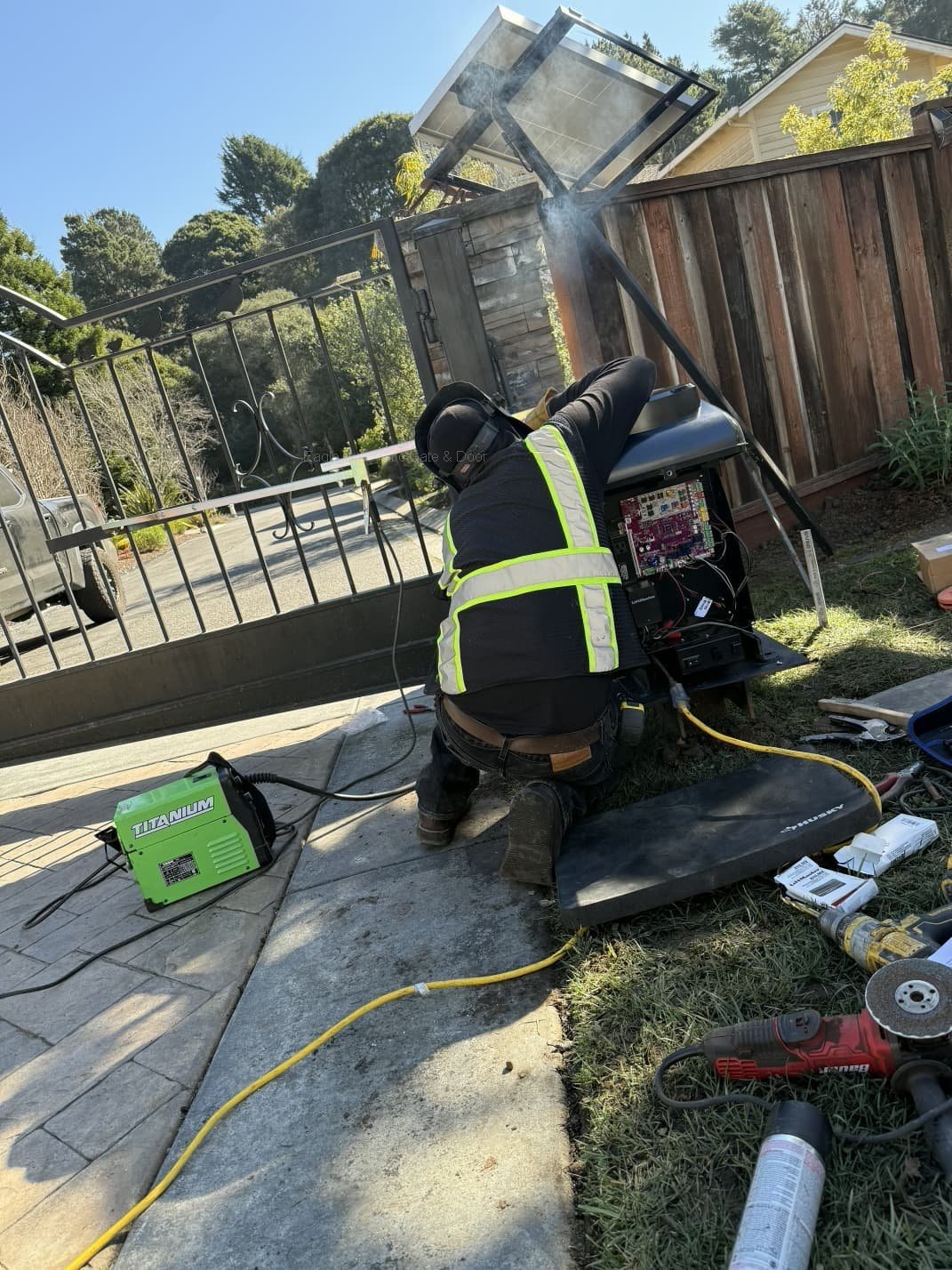
Call for service when a post moves, weld cracks, gate falls or leans, operator cabinet has water or exposed wiring, the gate reverses unpredictably, safety devices fail a prescribed test, or manual release is not working. Do not increase force to mask resistance or work under an unsupported gate.
See our automatic gate repair, swing gate, sliding gate and Mountain View gate service pages.
Sources and limits
The manufacturer’s maintenance schedule controls for each model. Sources reviewed November 2026: DASMA automated gate owner checklist, DASMA gate opener safety tips and LiftMaster gate safety information.
Questions property owners ask
How often should an automatic gate be serviced?
Follow the operator and gate manufacturer schedules, then adjust for traffic, environment and observed wear. A high-cycle commercial entrance usually needs more frequent professional attention than a lightly used residence.
Should I grease the gate track?
Do not assume so. Many slide-gate tracks should be kept clean rather than coated with grease that traps grit. Follow the hardware manufacturer’s instructions.
Can I clean a photo eye?
A property owner can usually remove surface dirt carefully when the owner’s manual allows it, but should not relocate, rewire or bypass the sensor.
What noise means I should stop using the gate?
Stop and call for service when noise comes with binding, scraping, sudden movement, structural flex, a cracked weld, loose post or unpredictable reversal.
Have Eagle inspect the opening and recommend the complete system.
We evaluate the gate, hardware, operator, controls and safety devices before recommending work.