Won’t open or close
Likely causes: Dead battery or no power, a tripped breaker, a failed control board, or stripped gears.
Safe check: Check the breaker and the operator’s power switch, then try the remote close to the gate.
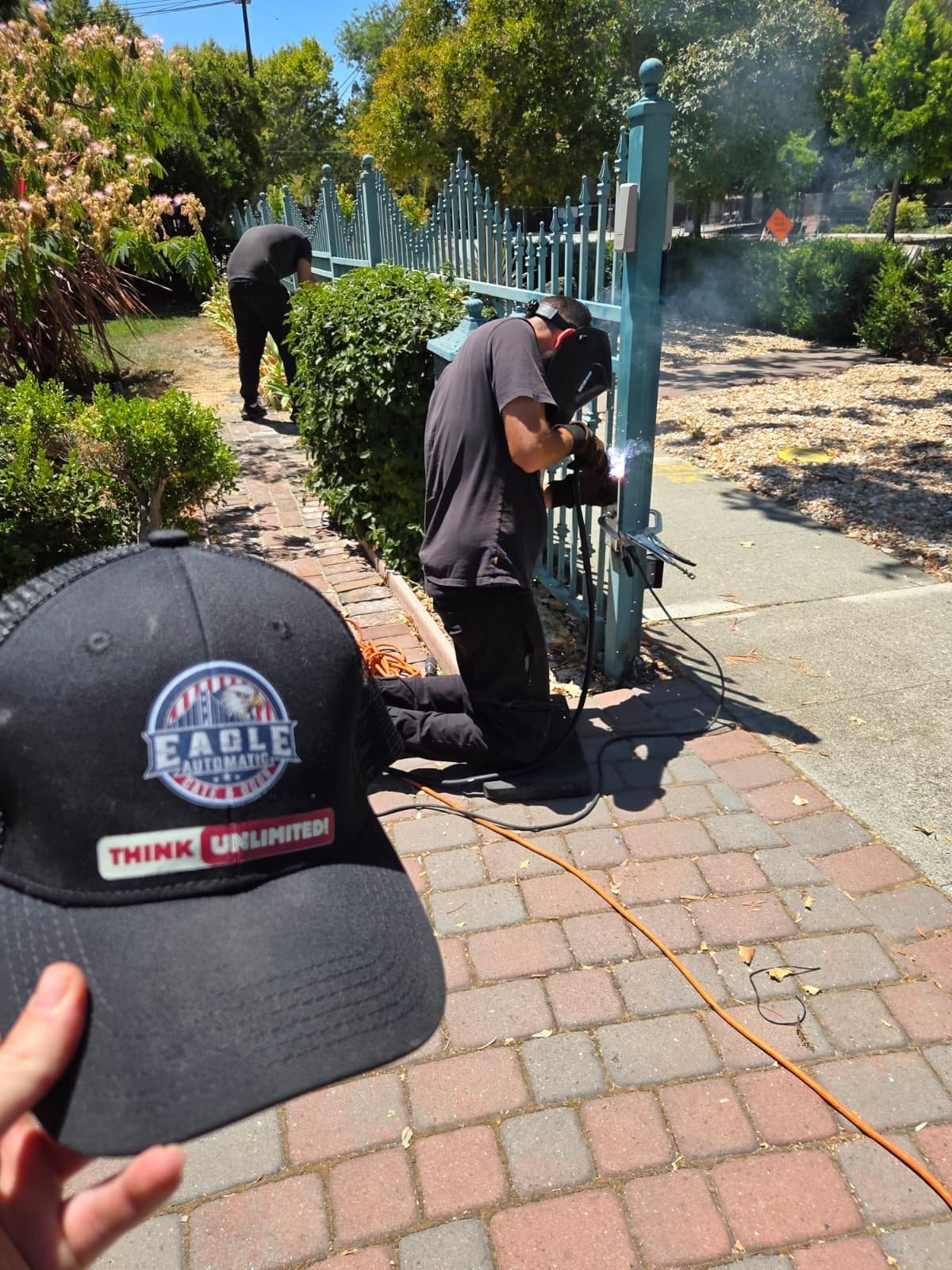
Call about thisAutomatic gate repair is fixing the parts that move and protect a powered gate: the operator (motor), safety sensors, control board, power supply, remotes and hardware. A technician tests each one, finds the part that failed and repairs or replaces it. Eagle does this for all gate types and brands across the Bay Area, with a written price before work starts.
Updated October 2026
Pick the symptom closest to yours (swipe on a phone). Each card lists the usual causes and one safe check you can do while you wait. Never bypass a safety sensor or force a powered gate open; call us instead.
Likely causes: Dead battery or no power, a tripped breaker, a failed control board, or stripped gears.
Safe check: Check the breaker and the operator’s power switch, then try the remote close to the gate.
Call about thisLikely causes: A blocked or dirty photo eye, a misaligned sensor, force or limit settings, or a binding hinge or track.
Safe check: Clear anything in the gate’s path and wipe both sensor lenses.
Call about thisLikely causes: An entrapment alarm after an obstruction, a low battery, a sensor fault, or an error code on the board.
Safe check: Count the beeps or note the code, and tell us when you call.
Call about thisLikely causes: A dead remote battery, lost programming, a receiver or antenna problem, or keypad wiring.
Safe check: Swap the remote battery and try a second remote or the keypad.
Call about thisLikely causes: Worn rollers or wheels, debris in the track, or a loose chain or gear rack.
Safe check: Clear the track, but don’t lift or push a powered gate back on.
Call about thisLikely causes: Worn hinges, a shifted post, a bent frame, or a loose operator arm.
Safe check: Look for a gap at the latch or a scrape line on the ground.
Call about thisLikely causes: A shaded or dusty panel, a worn-out battery, a charger fault, or a power surge.
Safe check: Clean the panel and look for new shade from growing trees.
Call about thisLikely causes: A bent frame, a damaged operator arm, or a broken post or hinge.
Safe check: Keep everyone clear and switch off the operator’s power if it’s safe to reach.
Call about thisWe repair and replace LiftMaster, DoorKing, HySecurity, All-O-Matic, Eagle Access Control and Maximum Controls (MAX) operators, plus Cellgate and DoorBird access systems and other major brands. Our trucks carry the common boards, sensors and batteries, so most repairs finish on the first visit.
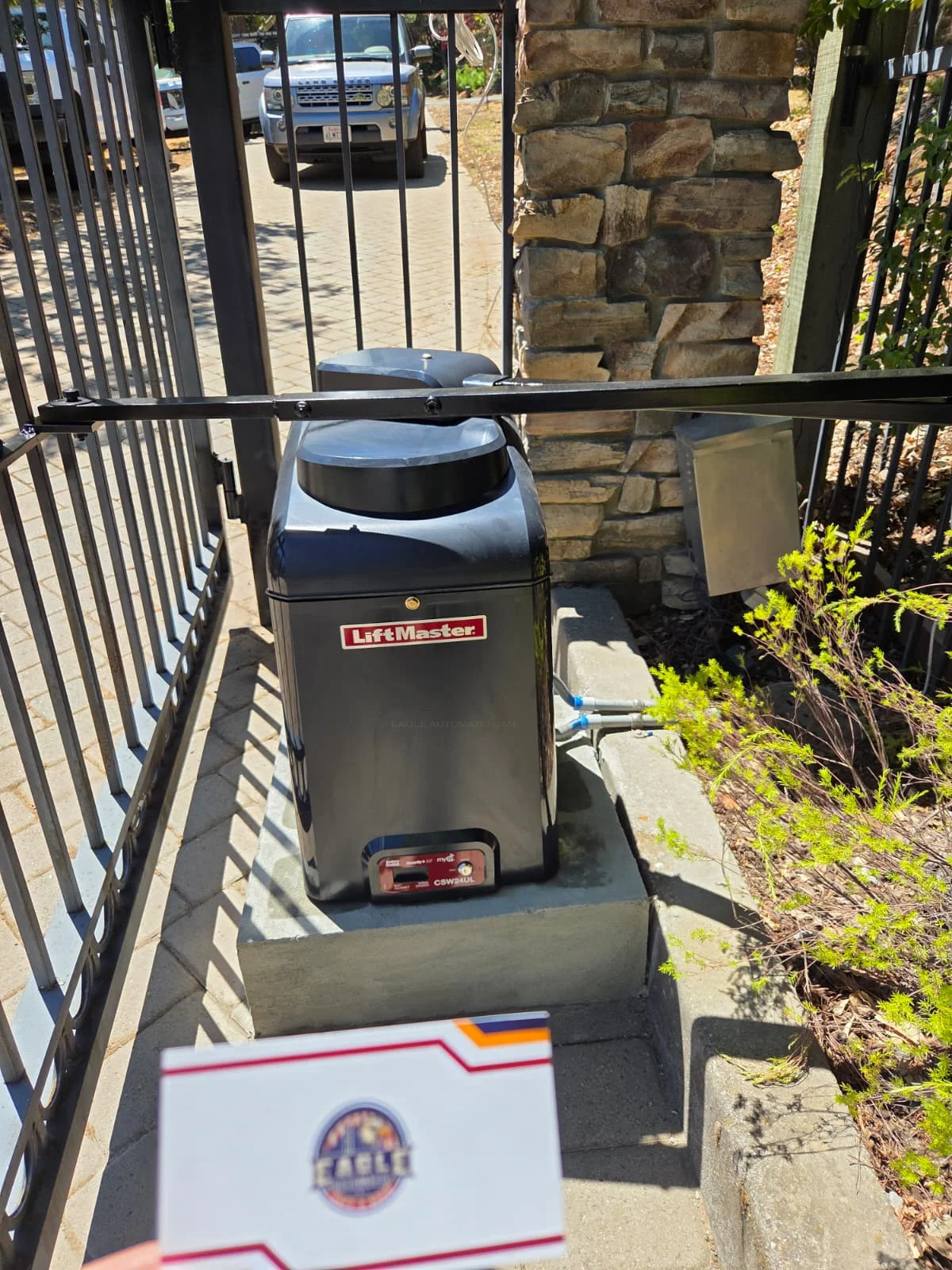
Certified technicians for LiftMaster slide and swing operators. Pick your model for its common problems and repair options.
Headquartered in Campbell, we serve the South Bay, Peninsula, East Bay, North Bay and Santa Cruz County. Visits are by appointment.
Still not sure? Call us and describe what your gate is doing.
The most common causes are a tripped breaker or lost power, a blocked or misaligned safety sensor, a failed control board or capacitor, a manual release left engaged after a power outage, or a dead remote or keypad. Keep people and cars clear, don’t force the gate, and call a technician to test the system.
Automatic gates are designed to stop and reverse when they sense resistance, a safety requirement for gate operators under UL 325. Reversing usually means a safety sensor or edge is being triggered, the force or limit settings have drifted, or a binding hinge, roller or track is making the motor work too hard.
Beeping often means the operator has gone into an alarm after detecting an obstruction more than once, or that the backup battery is low. Many operators also show a diagnostic code. The cause has to be fixed before the operator is reset, which is why we test the whole system rather than just silencing the alarm.
Yes. Same-day gate repair is available across the Bay Area, depending on the day’s schedule. Call us and describe what the gate is doing so we can bring the right parts.
It depends on what failed. Aligning a sensor or reprogramming a remote is a small job, while a new control board, motor or welded hinge costs more. We inspect the gate first and give you a written price before any work starts.
Repair usually makes sense when the operator is a current model and a single part has failed. Replacement makes sense when the operator is discontinued, parts are hard to get, it is undersized for the gate, or it lacks modern safety sensors. When both options are reasonable, we explain both.
Yes. Our repairs are backed by a parts and labor warranty, and replacement operators also carry the manufacturer’s warranty. Your written quote lists the exact coverage.
Check the breaker and the operator’s power switch, swap the remote battery, and wipe the photo-eye lenses. If the gate is off track, bent or stuck partway, leave it and call us. Never bypass a sensor or force a powered gate.
It should be. Gate operators must meet the UL 325 safety standard, and we test photo-eye sensors and auto-reverse on every gate we install or repair.
Compare the work involved, check contractor credentials and review completed projects before you decide.