What Size Gate Opener Do You Need? A Bay Area Sizing Guide
Gate weight is only one part of the decision. Use this field checklist to match an operator to the gate, geometry, traffic and site conditions.
The four inputs that determine gate-operator size
Start with the gate itself. A swing leaf and a sliding gate transfer load differently, so an operator approved for one movement is not automatically appropriate for the other. The manufacturer’s model limits—not a generic horsepower label—control the permitted gate type, length and weight.
Next estimate real usage. A home opening six times a day has a different duty requirement from an apartment driveway, employee lot or delivery entrance. LiftMaster’s residential buyer guide tells buyers to consider gate type, length and weight, and anticipated daily and hourly cycles before selecting an operator.
Finally, inspect the gate manually. Hinges, rollers, track, posts, wheels and stops must let the gate travel smoothly. Sizing an operator around mechanical resistance hides the cause and can shorten component life.
| Input | Why it matters | What to collect |
|---|---|---|
| Gate movement | Swing and slide operators use different mechanics | Gate type and number of leaves |
| Length and weight | Each model has stated limits | Leaf length plus a reliable weight estimate |
| Traffic | Cycle demand affects operator class and duty rating | Busy-hour and daily openings |
| Site | Slope, wind, posts and mounting geometry change load | Wide photos and clearances |
Why two gates with the same weight may need different systems
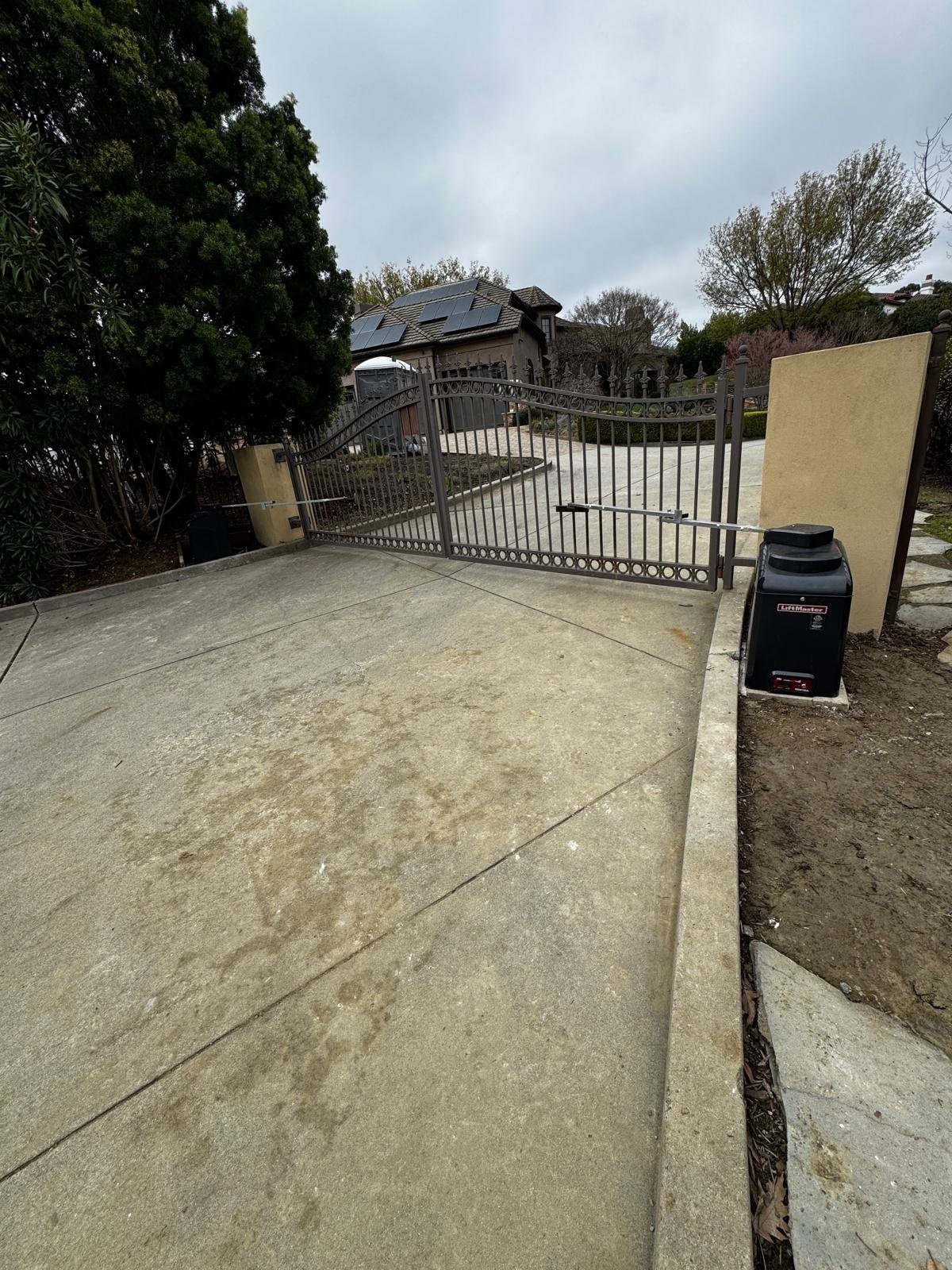
Operator geometry is the relationship among the hinge, brackets, arm and stops. A long solid privacy gate can also present more wind load than an open ornamental gate. A steep or uneven driveway may limit swing travel, while a sliding gate needs enough clear runback and a stable path.
Power, conduit routes, drainage, access-control wiring and entrapment zones belong in the same plan. DASMA’s pre-installation guidance recommends resolving those site details before concrete pads or conduits are placed. That planning is often more important than choosing the largest model on a product page.
Three sizing mistakes that produce unreliable gates
Buying by horsepower alone. Horsepower does not replace the manufacturer’s gate-length, gate-weight, duty-cycle and usage-class requirements.
Automating a gate that does not move freely. Repair alignment, hinges, rollers, track or posts before expecting the operator to compensate.
Forgetting the complete safety system. A listed operator still needs compatible monitored protection for the entrapment zones created by the installation. UL Solutions explains that external devices must be selected for the operator and the site.
What to record before asking for an operator quote
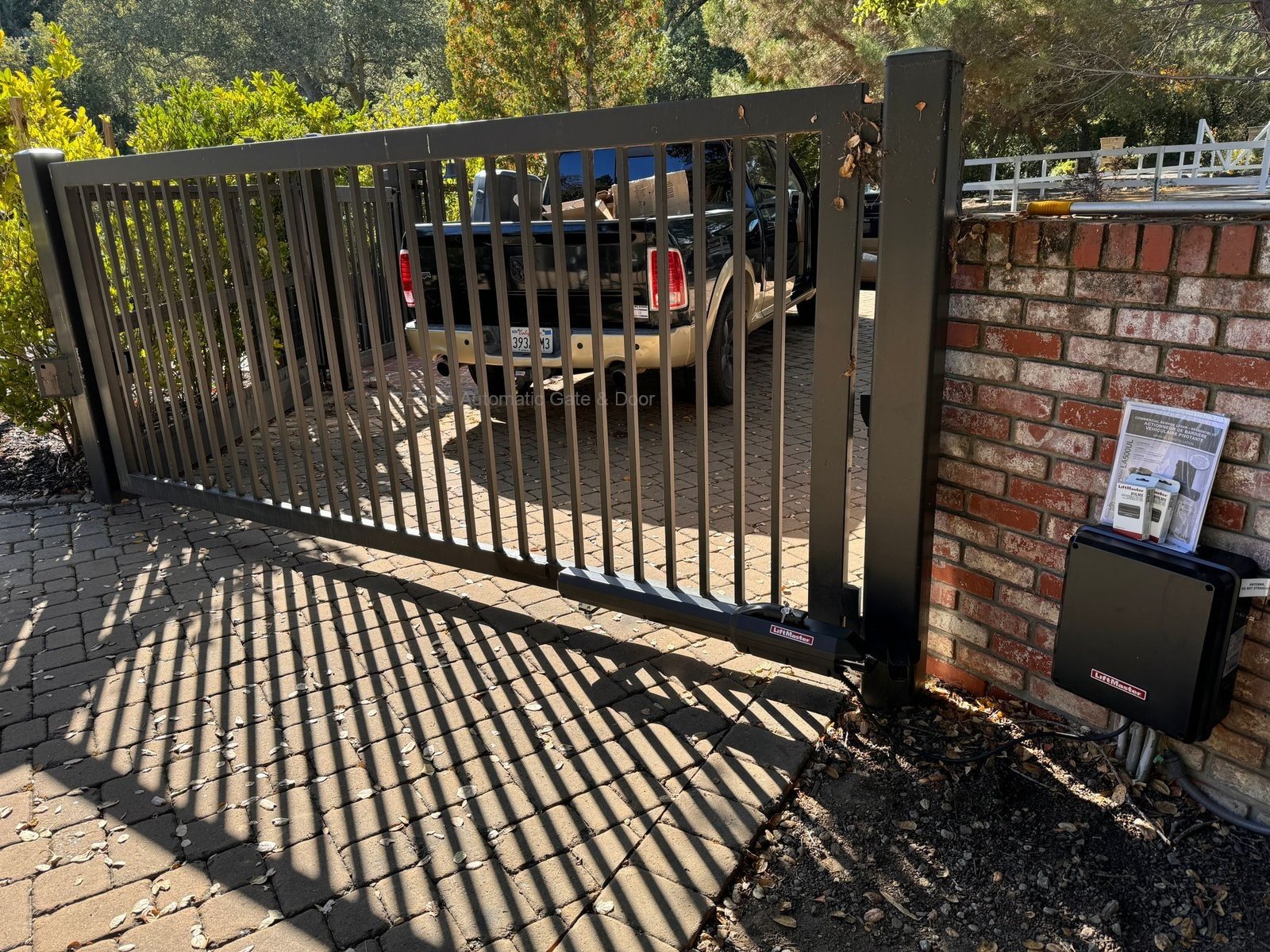
Measure the opening and each gate leaf, photograph the full travel path, note whether the gate can be moved smoothly by hand, and count a realistic busy-hour cycle estimate. Include the operator label if one already exists and photograph nearby power, posts, slopes and access-control equipment.
For Bay Area help, compare our automatic gate opener services, electric gate installation, Los Gatos gate service and Saratoga gate service pages.
Sources and limits
Model limits and installation instructions always control. Sources reviewed November 2026: LiftMaster residential gate operator buyer’s guide, DASMA gate-operator site planning guidance and UL Solutions on external entrapment protection.
Questions property owners ask
Can I use a larger opener than the gate needs?
A model with adequate capacity can be appropriate, but bigger is not automatically better. The operator still must match the gate type, geometry, usage classification, required safety devices and manufacturer instructions.
Does gate weight include the decorative panels?
Yes. The finished gate—including infill, hardware and later additions—affects the load. Solid panels also change wind exposure, so a site evaluation matters.
Can an opener fix a gate that is hard to move by hand?
No. Binding hinges, damaged rollers, poor track, leaning posts or a dragging leaf should be corrected first. The operator should move a mechanically sound gate.
How do I estimate gate cycles?
Count every complete opening and closing during a normal day and during the busiest hour. Include residents, employees, deliveries, vendors and scheduled access.
Have Eagle inspect the opening and recommend the complete system.
We evaluate the gate, hardware, operator, controls and safety devices before recommending work.