
How to replace a garage door cable, and when not to
How garage door cables work, the signs one is failing, why replacing them means unwinding the springs, and what a technician does step by step.
How garage door cables work
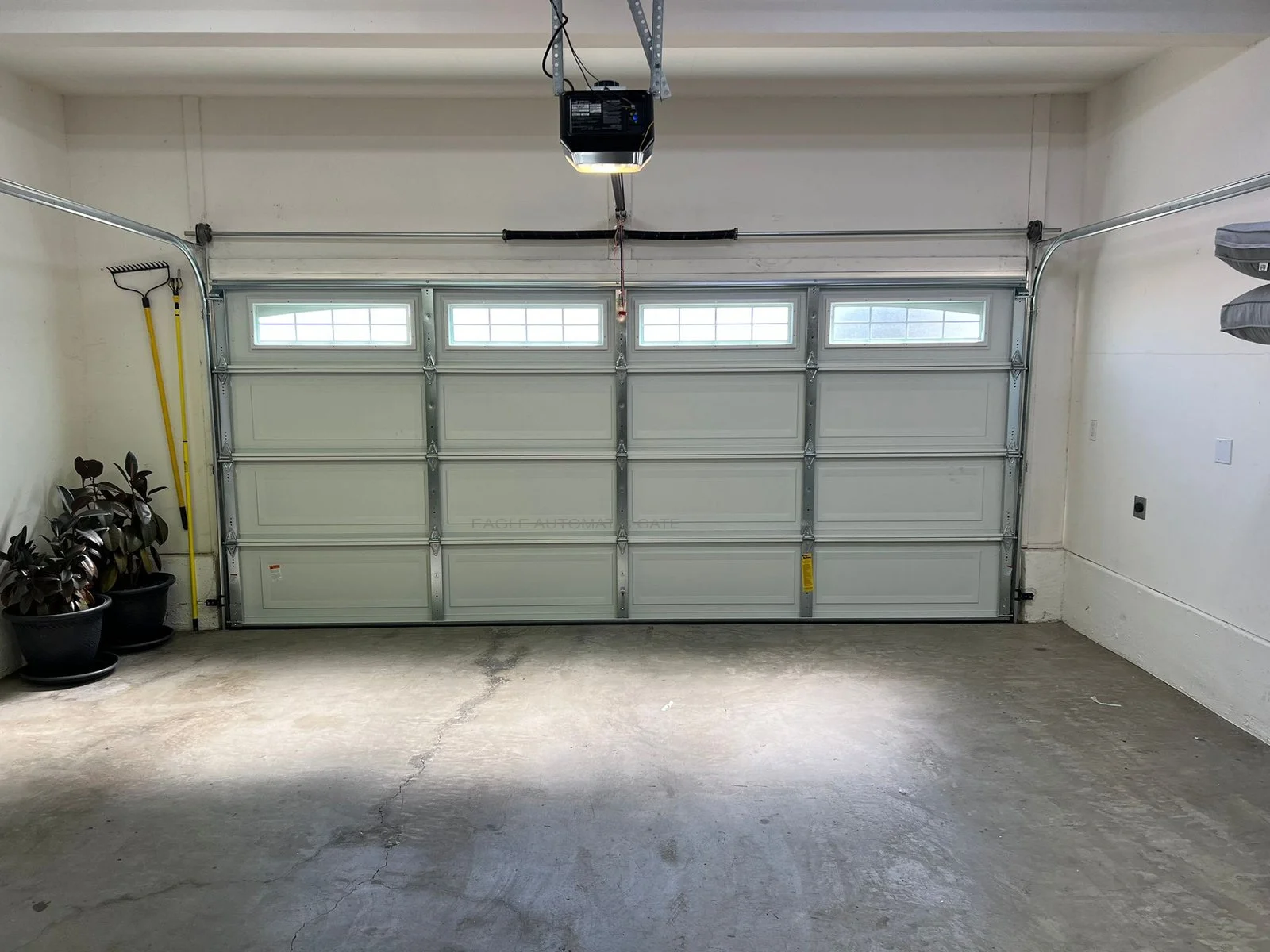
Most Bay Area homes have a torsion system: a spring on a shaft above the door, with a cable drum at each end. A steel cable runs from each drum down to a bracket at the bottom corner of the door. As the spring unwinds, the drums turn and the cables lift the door.
Older or lighter doors may use extension springs along the side tracks instead, with cables running over pulleys. Either way, the cables carry the door’s weight, so a failing cable puts the whole door out of balance.
Signs a cable needs replacing
- Frayed, rusty or broken strands, usually near the bottom bracket
- A cable that looks slack, or has come off its drum
- The door hangs crooked, with one side lower than the other
- Jerky movement, or the opener strains to lift the door
- A loud snap followed by the door not opening
Why this isn’t a DIY job
The cable itself is simple. The danger is what’s attached to it. The bottom bracket and the spring are both under tension, and loosening either one the wrong way can spin a winding cone or drop the door. Garage door spring work causes thousands of injuries every year, which is why we don’t recommend it to homeowners.
If you’re unsure, leave the door closed and call. A cable that’s caught early is usually a quick visit.
What a technician does
- Locks the door in place so it can’t move.
- Unwinds the torsion spring with proper winding bars to remove the tension.
- Removes both old cables. We replace them as a pair so the door stays balanced.
- Checks the drums, bottom brackets, rollers and spring for wear.
- Installs new cables of the right length and diameter, seated evenly on both drums.
- Winds the spring back to the correct number of turns and checks that the door stays put halfway open.
- Tests the opener’s force settings and the safety reverse.
If a cable breaks
- Don’t use the opener, and don’t try to lift the door by hand.
- If the door is open, leave it open and keep people and cars out from under it.
- Unplug the opener so nobody presses the button.
- Call for emergency garage door repair.
Making new cables last
Look at the cables when you lubricate the door each spring and fall. Rust starts at the bottom bracket, where water collects, so keep the bottom seal in good shape. Springs and cables tend to wear out around the same time, so when one fails it’s worth checking the other.
Questions
Should I replace one cable or both?
Both. Cables wear at the same rate, and a new cable next to an old one can leave the door uneven.
Can I use my garage door with a broken cable?
No. The door is out of balance and can drop or bind. Leave it where it is, unplug the opener and call a technician.
Is it safe to replace a garage door cable myself?
We don’t recommend it. Replacing a cable means releasing and re-winding the spring tension, which is the most dangerous part of garage door repair.
How long do garage door cables last?
It depends on use and moisture. Check them twice a year, and replace them at the first sign of fraying or rust.
Eagle Automatic Gate & Door repairs and installs gates and garage doors across the Bay Area. Call or send a request.